Home/Articles/Machine Buying Guides
Machine Buying GuidesHow to Find the Best Paper Napkin Machine Manufacturer in India
Every manufacturer claims to be the best. Here are six criteria that define what best actually means in this category — and how to verify any claim before you sign anything.
Birla Hi-Tech Machines·13 Jul 2026·6 min read

"Best" Is Meaningless Without Criteria
Search for paper napkin machine manufacturers in India and you will find dozens of results, each claiming to be the best, the most trusted, or the most experienced. These claims cost nothing to make and even less to verify — because most buyers don't know what to verify.
The manufacturers worth buying from are not necessarily the ones with the loudest claims. They are the ones whose claims hold up when you check them. Here are the six criteria that define the best paper napkin machine manufacturer in India — and the questions you need to ask to separate real from inflated.
1. Component Specification — What's Actually Inside the Machine
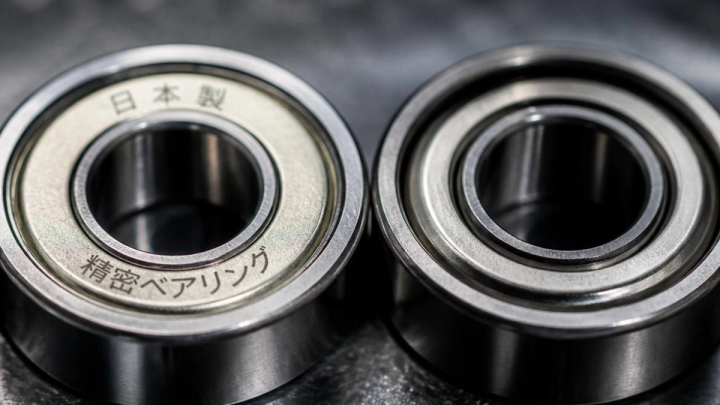
The single most important differentiator between manufacturers is what they put inside their machines. This is where quality is built or compromised — and it is almost never mentioned in a brochure.
Ask every manufacturer you speak to: which bearing brands are installed, and where are they manufactured? The answer tells you everything. Japanese bearing manufacturers — FYH and Nachi specifically — produce bearings to dimensional tolerances and load ratings that generic Chinese equivalents cannot match. A tissue machine runs 10–16 hours a day under continuous rotational load. The bearing grade determines how long it runs without failure.
Ask about the automation system. A Siemens PLC and HMI means your machine can be serviced by any qualified automation engineer anywhere in the world. A proprietary or unspecified control system means you are dependent on the original manufacturer for every fault, every parameter change, every software issue — indefinitely.
Ask about pneumatic components. Italian and German pneumatic systems hold tolerance across temperature variation and continuous cycling. They are also available through global supply chains. If a pneumatic valve fails in your factory, you should be able to source the replacement in days, not weeks.
A manufacturer who cannot answer these questions specifically is using components they would rather you not research.
2. Warranty Period — What the Manufacturer Is Willing to Stand Behind
The warranty period is a financial commitment, not a marketing feature. For every machine under warranty, the manufacturer absorbs the cost of any failure in that window. The length of the warranty is a direct statement of how confident they are in their own engineering.
The legal minimum in India is 12 months. Most manufacturers offer exactly that. A small number offer 18 months — the longest warranty period available from any Indian paper napkin machine manufacturer.
When evaluating warranty terms, ask what is covered and what is excluded. Consumables — blades, rubber parts — wear by design and are a reasonable exclusion. Everything else should be covered without conditions. If the warranty is full of carve-outs, the confidence behind it is not what it appears.
3. Verified Track Record — Numbers That Can Be Checked
Every manufacturer in this category claims experience. The difference between a real track record and an inflated one is specificity and verifiability.
A manufacturer with a genuine export record can tell you which countries their machines are running in — not "40+ countries" as a round number, but named markets with named clients. A manufacturer with genuine domestic reach can give you client references by state, by product type, by years of operation.
Ask for a reference from a client who has been running their machine for five or more years. Ask for a reference in your specific product category — if you are buying a napkin machine, ask to speak to someone running a napkin machine, not a rewinder. Ask for a reference in a geography similar to yours.
The answers — or the inability to provide them — will tell you more than any claim on a website.
4. After-Sales Support — What Happens After the Machine Arrives
Installation and commissioning is where the quality of a manufacturer's after-sales commitment becomes visible immediately. Not all manufacturers send engineers to commission machines on-site. Some ship the machine and leave installation to the buyer. For a first-time buyer, or any buyer setting up in a new location, this distinction matters enormously.
Ask who commissions the machine and confirm it is the manufacturer's own engineer, not a third party. Ask what support is available after installation — phone, WhatsApp, on-site visits. Ask how long spare parts take to reach you and whether they are stocked in India or shipped from overseas.
A manufacturer with 150+ clients across 22 countries has built an after-sales infrastructure that a smaller manufacturer simply cannot replicate. The depth of that infrastructure is not visible in a brochure — it shows up the first time something goes wrong.
5. Innovation History — A Manufacturer Who Leads, Not Follows
In any manufacturing category, the companies who innovate define the standard. The companies who copy define the floor.
India's tissue machine industry has one manufacturer with a documented history of industry firsts: 13 of them, spanning 1977 to 2026. India's first automatic paper napkin folding machine. India's first double deck machine. India's first 4–6 colour printing machine with ceramic rollers. India's first N-fold machine. India's first B-fold machine.
A manufacturer with this track record builds machines differently from one that entered the market by replicating what already existed. The engineering decisions — tolerances, drive systems, frame design — reflect decades of accumulated knowledge that cannot be acquired quickly or cheaply.
When a manufacturer tells you they have been in this business for decades, ask what they have contributed to it. The answer separates innovators from followers.
6. Verifiability — The Standard Every Serious Manufacturer Should Meet
The tissue machine market has no shortage of inflated claims. Export numbers, client counts, machine speeds, years of experience — all of these can be stated without evidence and are frequently overstated.
The simplest filter: ask every manufacturer to verify their claims specifically.
On exports: Ask for the names of countries and, where possible, client references in those markets. A manufacturer who has genuinely exported to 22 countries can name them. One who has not will give you a round number and change the subject.
On client count: Ask for references by segment — hospitality clients, industrial clients, export clients. A manufacturer with 150+ genuine clients can provide references across categories. One padding a number cannot.
On machine speed: Ask for the operating speed range, not just the peak figure. Ask what speed their clients typically run at in daily production. Peak speed and sustainable production speed are not the same number.
On experience: Ask what the manufacturer has built that nobody else had built before. Experience measured in years is easy to claim. Experience measured in documented firsts is not.
A serious manufacturer welcomes verification. One with something to hide will not.
How Birla Hi-Tech Machines Measures Up
Birla Hi-Tech Machines was founded in 1999 by Ashwani Birla, backed by a family manufacturing legacy tracing to 1977. Our machines specify FYH and Nachi Japanese bearings, Siemens PLC and HMI automation, and European pneumatic components. We offer an 18-month warranty — the longest in India — covering all mechanical and electrical components.
We have delivered 1,200+ machines to 150+ clients across 22 named countries — including Kimberly-Clark, the world's largest tissue manufacturer. Our after-sales team commissions every machine on-site, provides phone and WhatsApp support, and stocks spare parts in India.
We have 13 documented India Firsts between 1977 and 2026. Every claim on this page can be verified. We invite you to try.
If you are evaluating paper napkin machines and want to speak to a client reference, request a specification sheet, or discuss your production requirements directly — contact us below.
📞 +91 98110 19798 💬 WhatsApp: +91 92055 79798 ✉️ info@papernapkinmachines.com Contact Birla Hi-Tech Machines
Further reading: The Tissue Industry Review — independent editorial coverage of the tissue conversion industry, including machine buying guides, market analysis, and technical knowledge.
/ FEATURED PRODUCT
Interested in the machines behind this industry?
Birla Hi-Tech Machines manufactures tissue converting equipment used by businesses across 22 countries.
View Product →/ RELATED ARTICLES
Keep Reading

Machine Buying Guides
How to Choose a Paper Napkin Machine in India: A First-Time Buyer's Guide
Most first-time buyers choose a machine before they understand their market. Here's the order to do it in — and what to check that nobody tells you to check.
11 Jul 2026· 6 min read

Machine Buying Guides
What's Actually Inside Your Tissue Machine — A Component-Level Comparison
Most tissue machine buyers compare price and country of origin. Neither tells you whether the machine will run in year five. Component specification does. Here's what to look for.
29 Jun 2026· 6 min read

Machine Buying Guides
The True Cost of a Cheap Tissue Machine — A 5-Year Comparison
That ₹6–7 lakh tissue machine looks attractive on day one. But add spare parts, technician visits, and downtime over five years — and the math inverts completely.
27 Jun 2026· 7 min read